




Last updated: November 2026
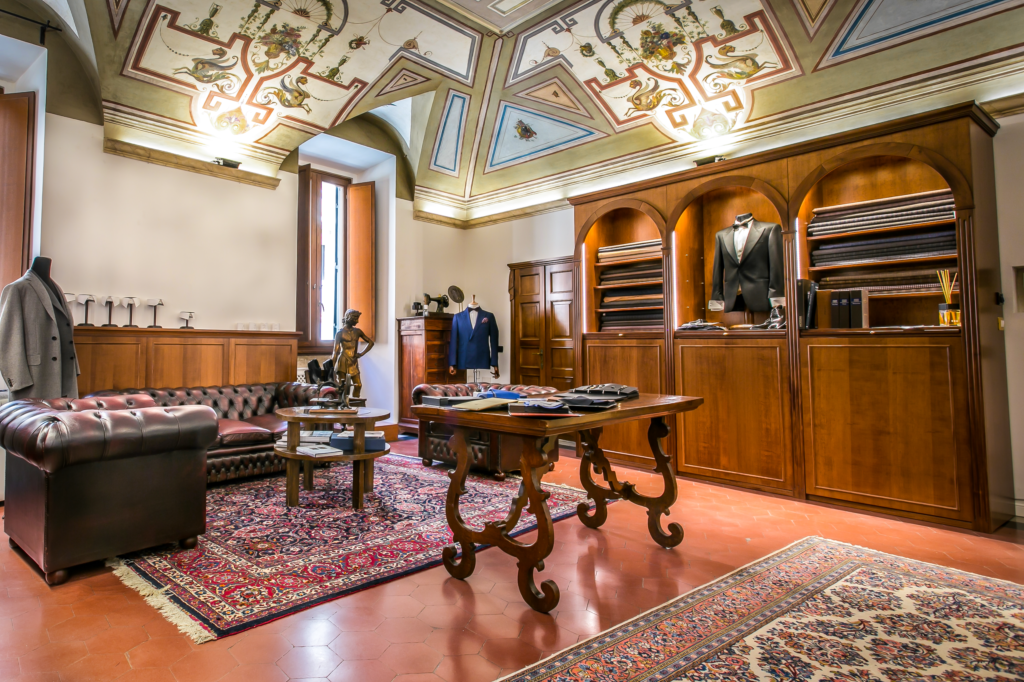
In Italy, men's business attire is built on a well-cut navy or grey suit, a light shirt and, in most formal settings, a silk tie: what makes the difference compared with other countries is the fit and the attention to detail. For professionals arriving from abroad, understanding these unwritten rules helps them present themselves correctly at meetings, business lunches and institutional appointments. In Italy, appearance is often seen as part of professionalism, not a detail. At Dalsarto, in the center of Rome, we welcome professionals from all over the world every year who want to dress the Italian way. Here is how the business dress code works in Italy.
In brief
- The Italian business dress code is built on a navy or grey suit, a white or light blue shirt and a silk tie.
- Compared with Anglo-American style, fit matters more: suits are slimmer, more proportioned and more carefully detailed.
- In Rome the style tends to be more classic and institutional, in Milan more contemporary.
- The concept of bella figura makes appearance an integral part of professionalism.
How do businessmen dress in Italy?
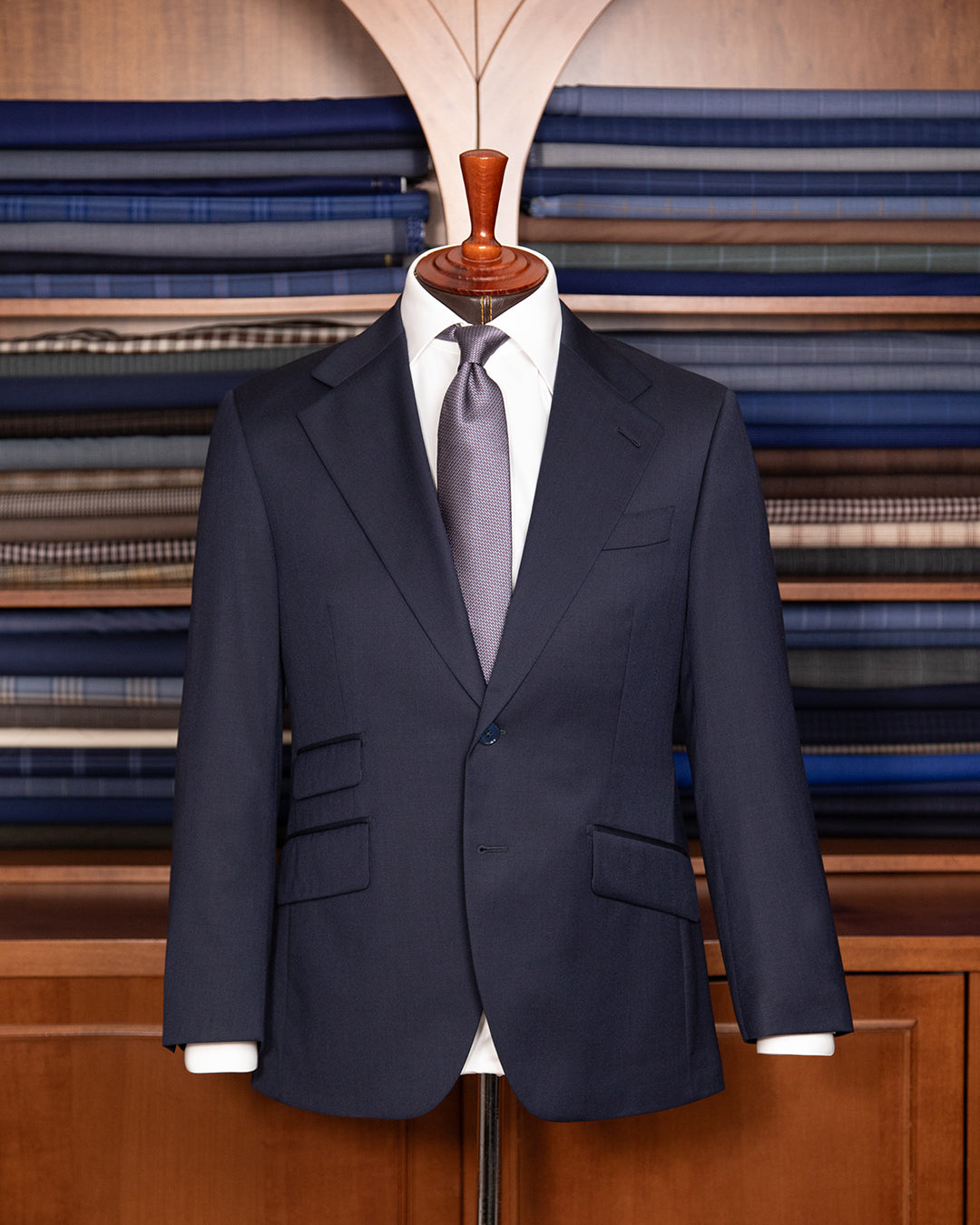
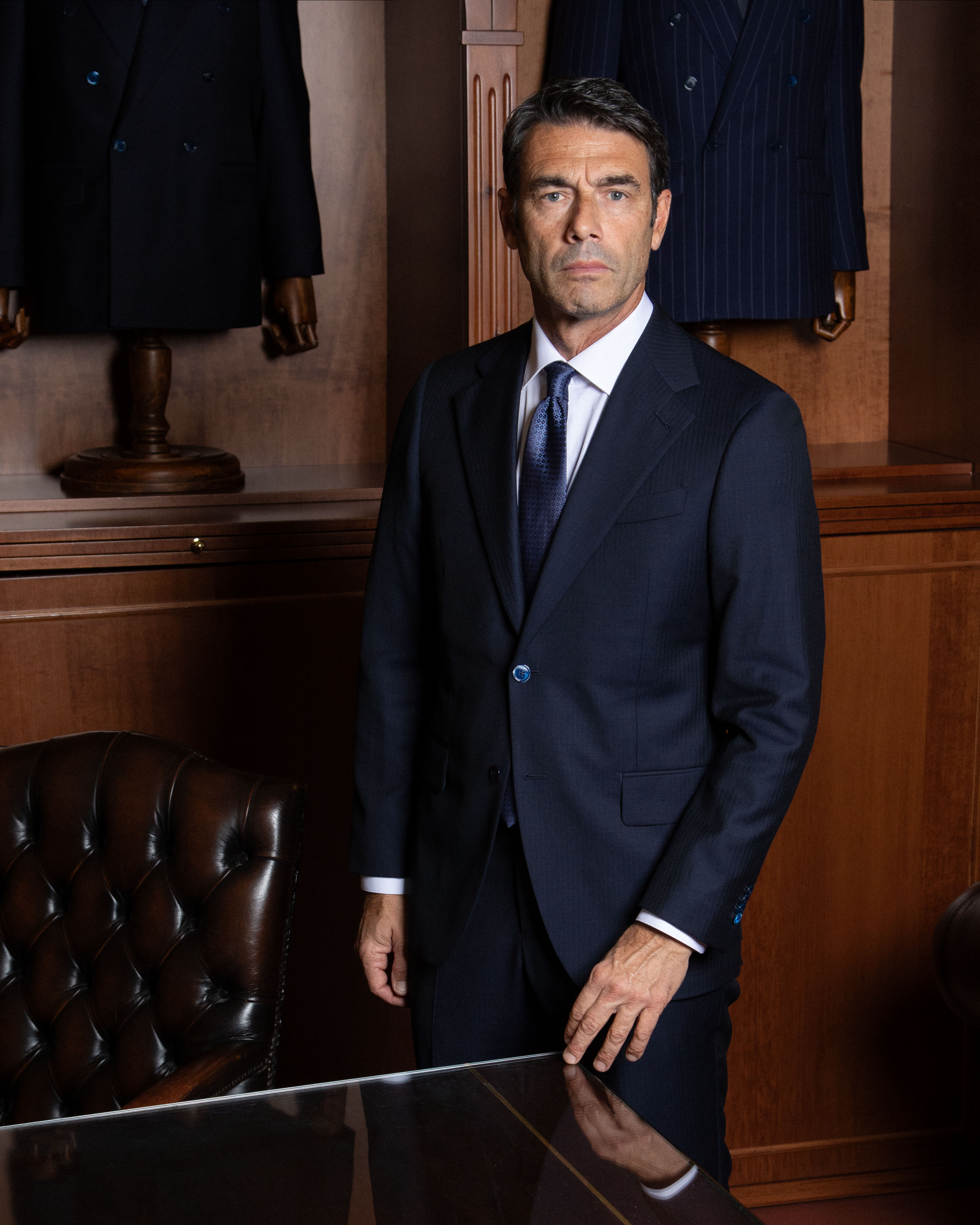
Italian businessmen usually wear a well-cut navy or grey full suit, with a light shirt and a silk tie, especially in finance, consulting, law and public institutions. The suit is not experienced as a uniform, but as an expression of personal care. A precise fit, coordinated colors and fabric quality matter more than the brand. In less formal settings the tie may be missing, but the jacket is almost always there. The Giotto suit in Dalsarto Blue, in pure wool with a classic 10.2 cm lapel and mother-of-pearl buttons, is a good example of the classic Italian business suit. Navy is the color to start with.
What is bella figura and why does it matter at work?
Bella figura is the Italian cultural principle that presenting yourself well, in appearance and manner, is a sign of respect toward others and toward the occasion. At work, it translates into constant attention to clothing: a neat suit, a pressed shirt, a well-knotted tie. It is not about showing off, but about consistency between image and professionalism. Arriving looking careless at an important meeting can be perceived as a lack of consideration. For anyone working with Italian counterparts, caring about clothing is a simple way to build trust. In Italy, the first impression often comes through the suit.
What is the difference between Italian and British or American business style?
Italian business style favors slimmer, more proportioned suits, more natural shoulders and greater attention to color, while Anglo-American style tends toward more rigid structures and fuller fits. In Italy, a suit that is too loose is noticed immediately, as is a sleeve that is too long or pants that fall badly. Pairings are also more considered: shirt, tie and suit form a harmonious whole. Anglo-American style, by contrast, often favors practicality and tradition. The Modernico suit in Dalsarto Blue, with its sculpted single-breasted jacket, expresses this idea of a precise, contemporary fit well. The difference is in the details.
What colors do Italian professionals wear?
Italian professionals mostly wear navy and grey suits, from navy to charcoal, with dark or camel overcoats in the colder months. Navy is the most common color, because it conveys reliability and is easy to pair. Grey, in its various shades, is the main alternative. Black is generally reserved for the evening and for ceremonies. In winter, a camel coat over a navy suit is one of the most typical pairings of Italian style. The camel wool and cashmere coat by Dalsarto, double-breasted, reinterprets the codes of the historic Ulster coat with a sculptural silhouette. A classic of the Italian street.
What shirt and tie are worn in Italy?
In Italy, the most common business shirt is light blue, followed by white, paired with a silk tie in sober colors such as midnight blue or burgundy. Pale blue is considered the everyday color par excellence, while white is reserved for the most formal occasions. Ties are usually silk, with small patterns or discreet textures. The pairing of shirt, tie and suit is chosen with care, avoiding excessive contrasts. The light blue piqué shirt by Dalsarto, in cotton, elevates the classic business blue with a raised micro-pattern. With a burgundy tie, it is a typically Italian pairing.
Are there differences between Rome and Milan?
Yes: in Rome, business style tends to be more classic and institutional, while in Milan, the capital of fashion and finance, it is often more contemporary and trend-aware. In Rome, a city of ministries, embassies and institutions, the dark suit with a tie remains the norm at official meetings. In Milan, modern cuts, refined fabrics and a few touches of personality are seen more often. In both cities, however, the quality of the fit remains the benchmark. The Giotto suit in London smoke grey, in Super 120s wool, works equally well in Roman and Milanese offices. A good suit travels through every city.
When can you take off your tie in Italy?
In Italy, you can take off your tie in more informal settings, in creative and tech industries and, often, in the warmer months, but it is still expected at formal and institutional meetings. Even without a tie, the jacket usually stays on and the shirt must be impeccable. When in doubt, it is better to arrive with a tie and take it off if others are not wearing one. The first meeting is the moment to be more formal. The burgundy silk tie with silver micro-pattern is an example of a sober, versatile tie, suitable for almost any business meeting. One gesture of elegance more is better than one less.
What mistakes should you avoid with the Italian business dress code?
The most common mistakes are suits that are too loose, short-sleeved shirts worn with a tie, black suits in the daytime and sporty outerwear worn over a suit. These are details that get noticed in Italy and can affect the first impression. Here is what to avoid:
- A suit that is too loose: drooping shoulders and long sleeves look careless.
- Short-sleeved shirts with a tie: not considered appropriate.
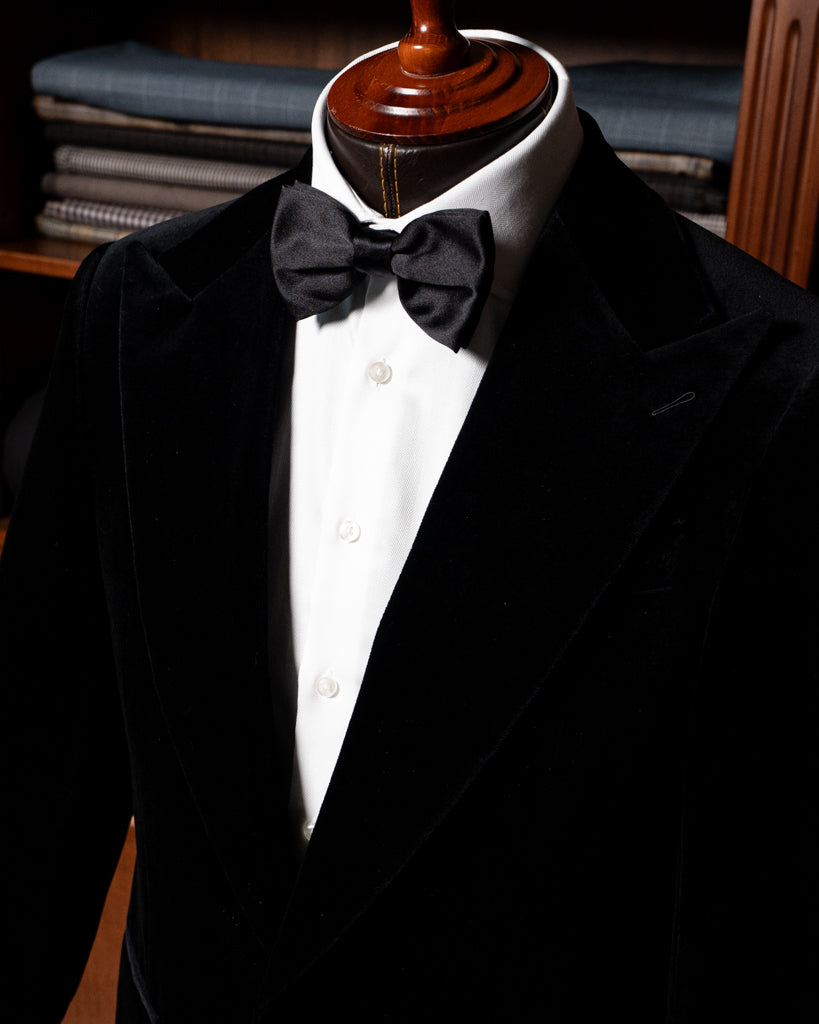
- A black suit in the daytime: associated with evening and ceremonies.
- Sporty jackets over a suit: a wool overcoat is better.
- A loose or stained tie: the knot should always be neat.
| Aspect | Italian style | Anglo-American style |
|---|---|---|
| Fit | Slim and proportioned | Fuller and more structured |
| Shoulders | More natural | Often more rigid |
| Suit colors | Navy and grey | Navy, grey, also black |
| Everyday shirt | Light blue or white | White or light blue |
| Winter coat | Dark blue or camel | Dark, often technical |
Why dress the Italian way for work?
Because Italian business style combines elegance and restraint: suits that fit well, sober colors and careful details convey professionalism without showing off. It is a style that works in Italy as well as in any other country, and it stays current for many years. For anyone visiting Rome on business, an Italian suit is also a way to bring home a piece of this culture. At Dalsarto, the business suit is available ready to wear and made to measure. From the Dalsarto atelier in Rome, Italian style becomes part of the everyday wardrobe.
Frequently asked questions
Is a tie required at work in Italy? Not always: it is expected in finance, law firms and institutions, while in creative settings it is often optional; the rules of business formal are in the business formal guide.
What suit should you pack for a business trip to Italy? One navy suit and one grey suit cover almost every meeting; to choose the right grey, see the grey suit guide.
What shirt should you wear to a business meeting in Italy? Light blue for everyday wear, white for the most formal occasions; all the options are in the guide to shirt colors.
How do you pair shirt and tie the Italian way? With harmonious colors and no excessive contrasts; the details are in the guide on how to match a tie with a suit and shirt.
How should you dress for work in Italy in winter? A heavier wool suit and a long overcoat, dark blue or camel; the rules are in the guide to the winter business dress code.
Is a separate jacket acceptable in an Italian office? Yes, in less formal settings, paired with grey pants; how to wear it is explained in the navy blazer guide.
Do Italians wear black suits for work? Rarely during the day: black is mainly associated with evening and ceremonies, while navy and grey are the norm.