


Last updated: November 2026
Business formal is the most formal professional dress code for daytime: for men, it means a dark full suit, a light shirt and a silk tie. It is one of the most common phrases in corporate invitations, office dress codes and international meetings, and also one of the most misunderstood. Knowing it precisely means always showing up at the right level, without doubts. At Dalsarto, the business suit is the heart of the men's wardrobe. Here is what business formal means, what to wear and how it differs from other dress codes.
In brief
- Business formal is the most formal professional dress code for daytime: a dark full suit, a light shirt and a silk tie.
- The correct colors are navy and charcoal grey, solid or with very discreet patterns.
- The shirt is white or light blue, and a tie is always required.
- It is more formal than business casual and less formal than black tie, which requires a tuxedo.
What does business formal mean?
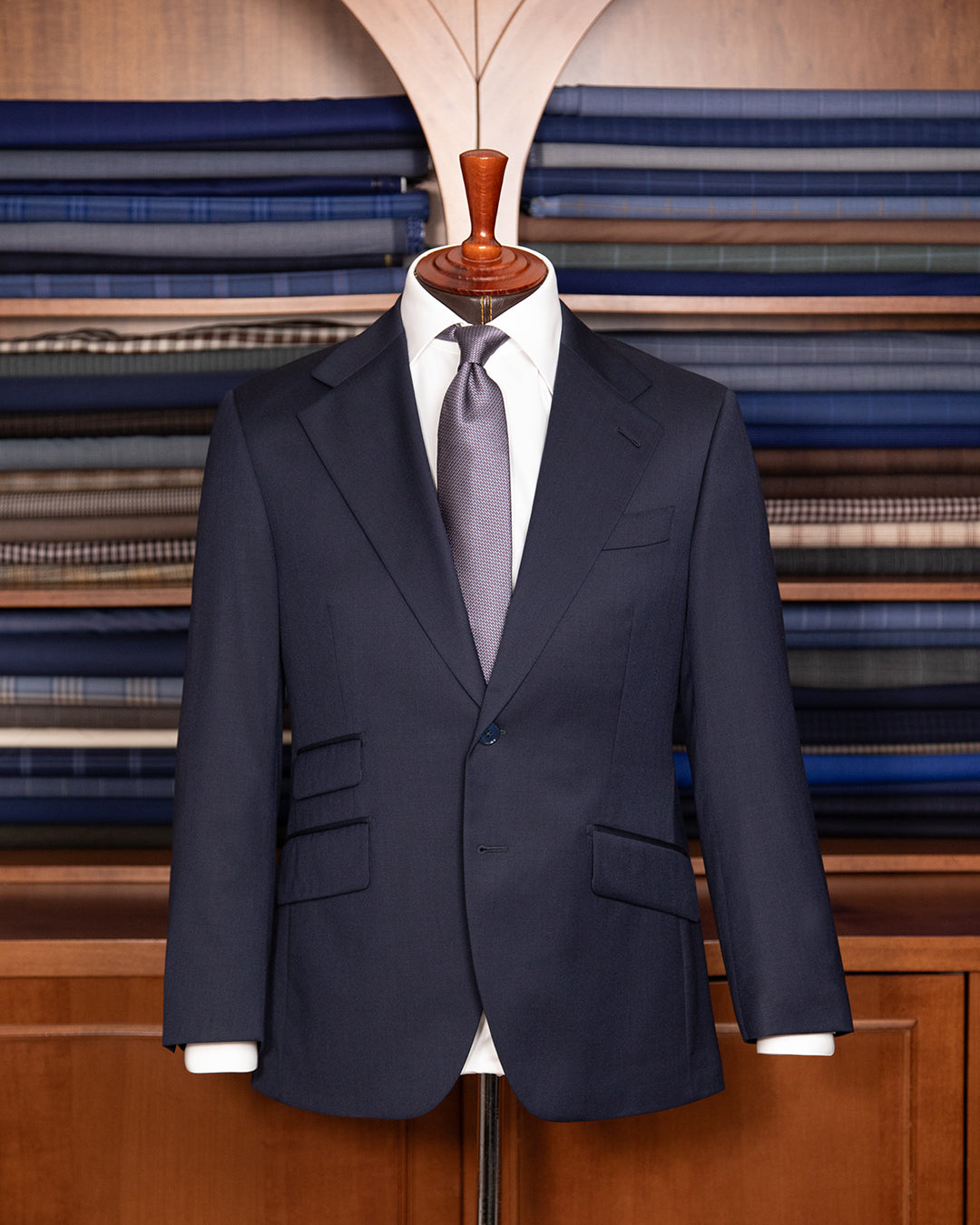
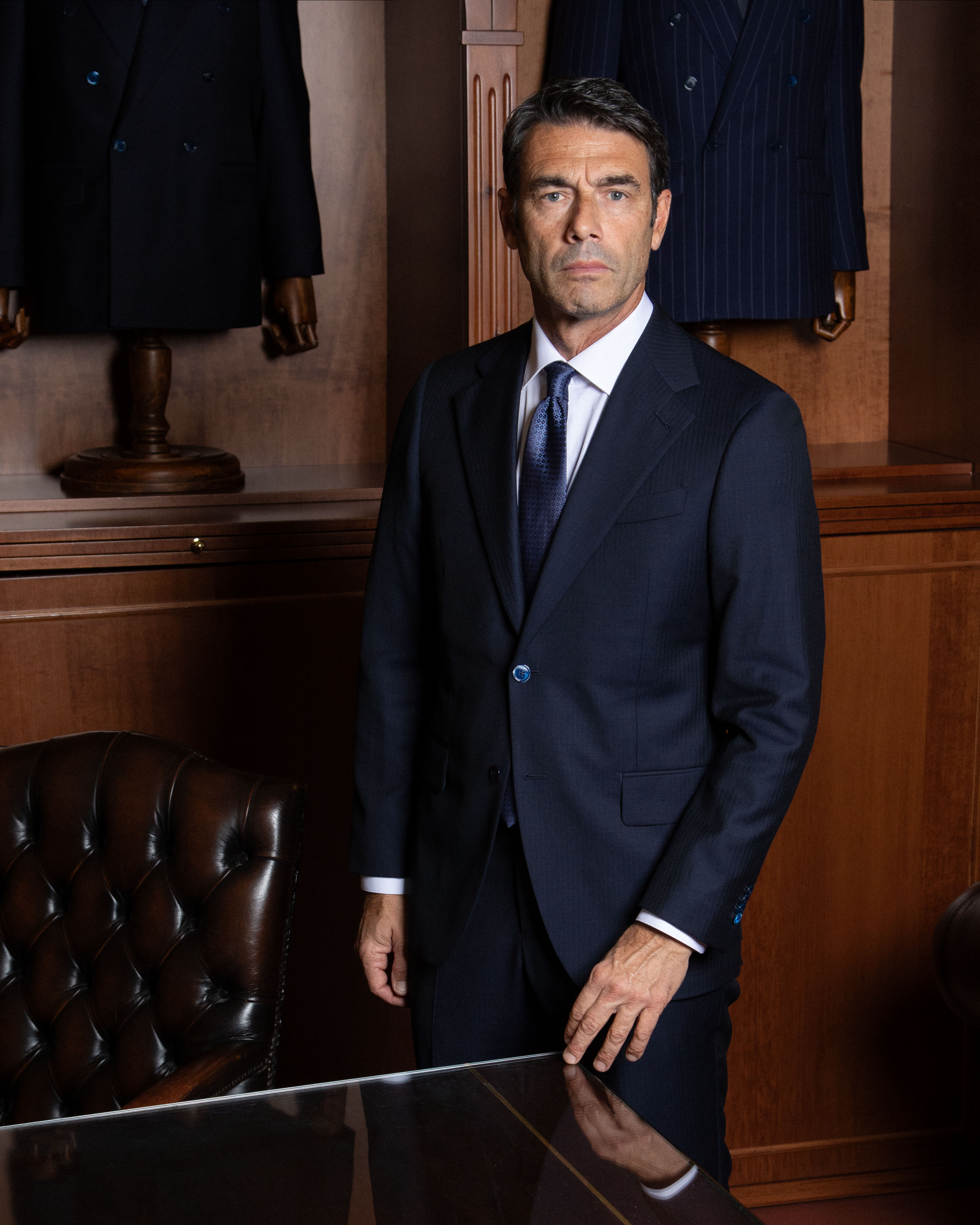
Business formal means wearing a dark full suit, with jacket and pants in the same fabric, a light shirt and a silk tie. It is the typical dress code for board meetings, institutional meetings, conferences, important interviews and law or finance firms. It does not allow separates, bright colors or sportswear. The overall look must be sober, polished and perfectly in order from morning to evening. The Giotto suit in Dalsarto Blue, in pure wool with a classic 10.2 cm lapel and mother-of-pearl buttons, is an example of a suit fully suited to business formal. Navy remains the safest choice.
What colors are allowed in business formal?
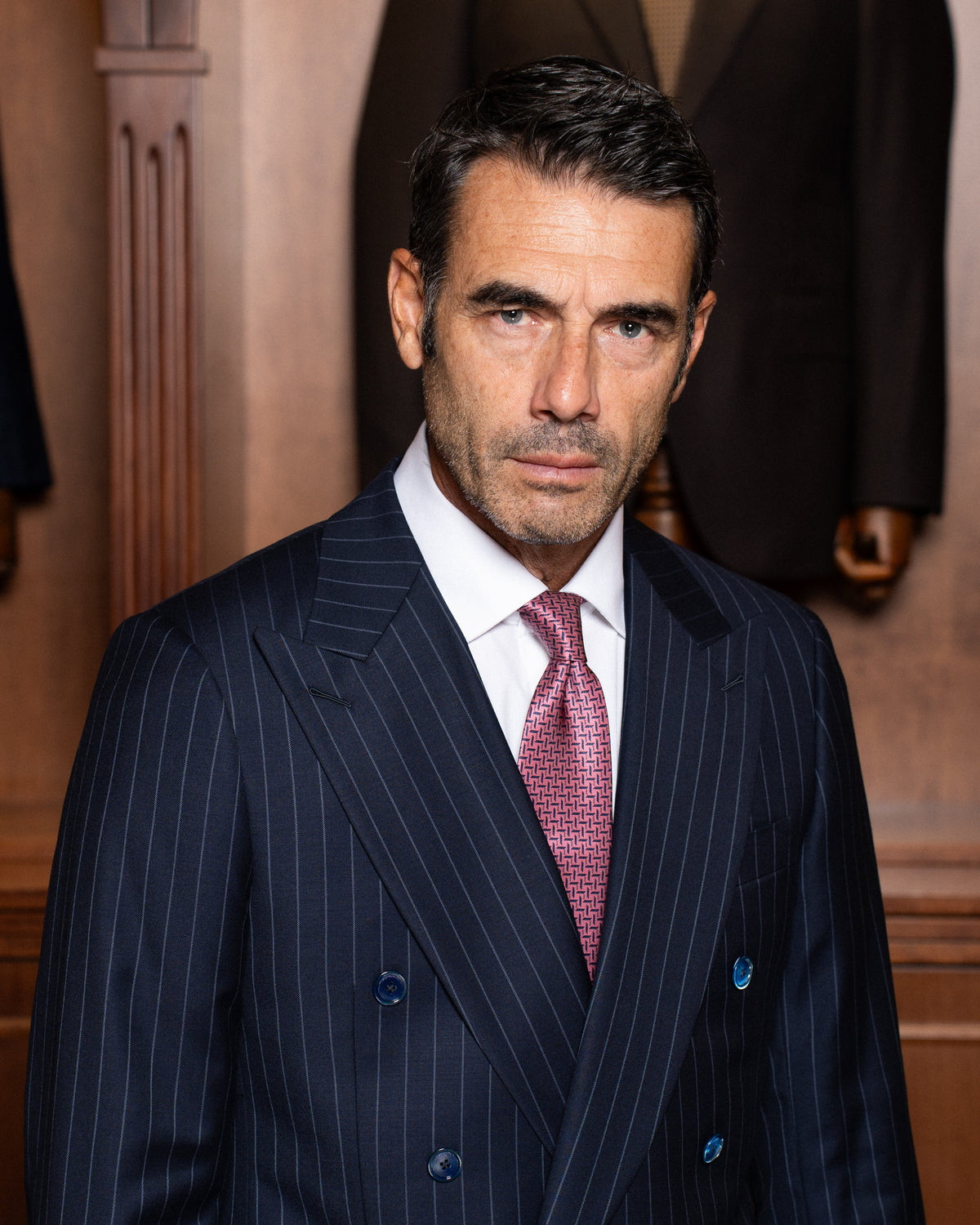
In business formal, the correct colors are navy and charcoal grey, followed by dark medium grey; black is generally avoided in the daytime. Black is associated with evening and ceremonies, while navy and grey convey reliability and restraint. The fabric can be solid or have a very discreet pattern, such as a fine pinstripe or micro herringbone. Colors such as beige, green or brown belong to less formal settings. The Perugino suit in charcoal grey by Dalsarto, in a very fine-grained wool, is an alternative to navy that fully suits business formal. Navy and charcoal cover almost every professional occasion.
What shirt should you wear for business formal?
For business formal, the shirt should be white or pale light blue, long-sleeved, solid or with very fine stripes. It should always be perfectly pressed, with a structured collar suited to a tie, such as a cutaway collar. Dark colors, visible patterns and short-sleeved shirts should be avoided. A white shirt remains the most formal choice of all, because it brightens the face and pairs with every suit and tie. The white shirt with French collar, in Egyptian cotton poplin with mother-of-pearl buttons, is designed to frame the tie with elegance. An impeccable detail shows care.
Is a tie required for business formal?
Yes, in business formal a tie is always required, and it is what sets it apart from business casual. It should be silk, in sober shades such as midnight blue, burgundy or grey, with a small, regular pattern. Ties that are too light, large patterns and bright colors should be avoided, as they draw attention away from the face. The knot should be neat and in proportion to the shirt collar. The midnight blue tie with white micro-dots, in silk, is an example of a tie fully suited to business formal. With a navy or grey suit, it is always a correct pairing.
What coat should you wear with business formal?
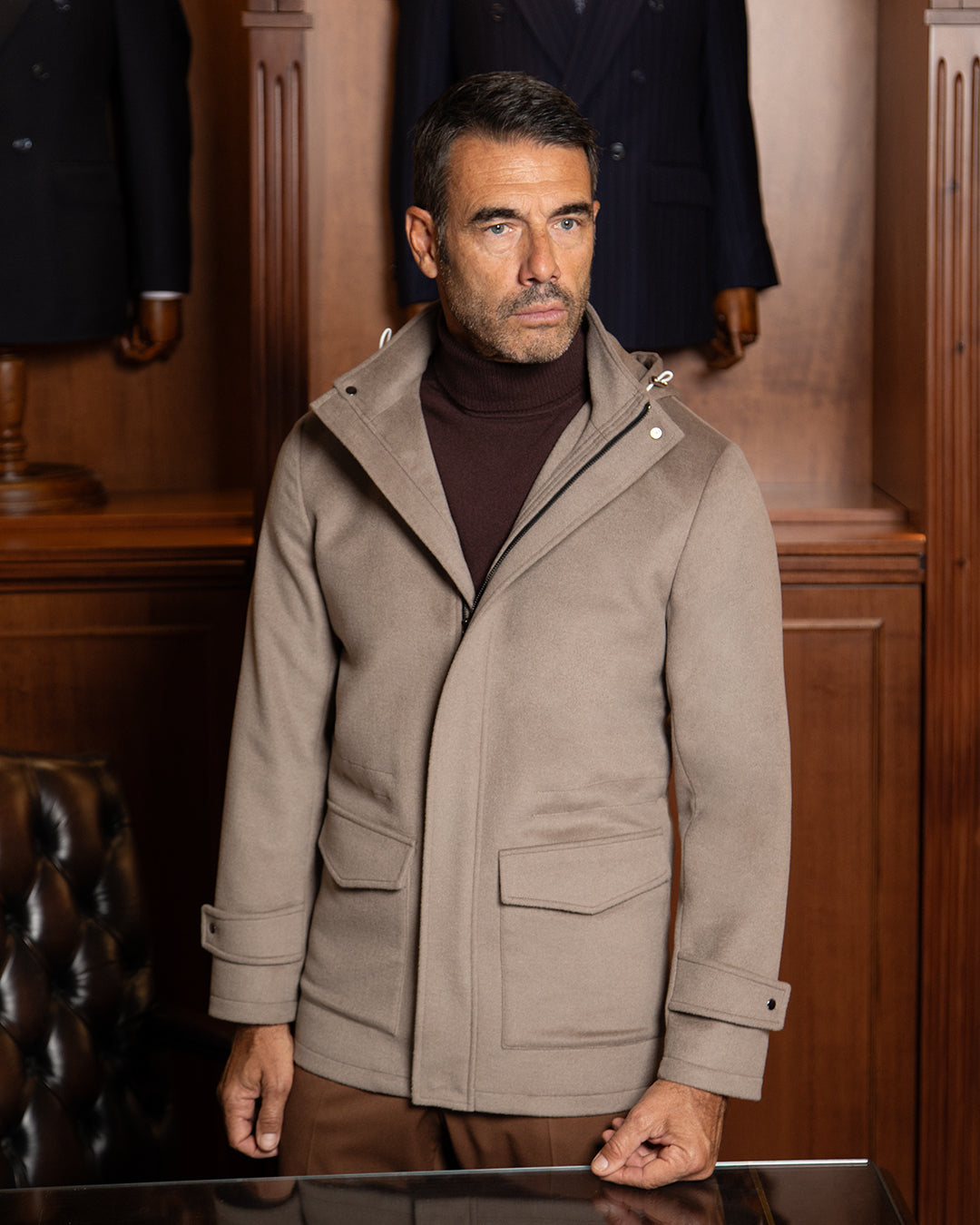
With business formal, the overcoat should be dark, in wool or wool and cashmere, and long enough to fully cover the suit jacket. Dark blue, black and charcoal grey are the most suitable shades, and single-breasted is the most sober choice. Sporty jackets, puffer coats and parkas are not appropriate over a formal suit. The coat is the first thing others see when you arrive, and it must live up to the suit. The Ghiberti black wool and cashmere coat by Dalsarto is designed to add a touch of luxurious austerity to a business suit. It completes the professional image from the very first moment.
What is the difference between business formal, business casual and black tie?
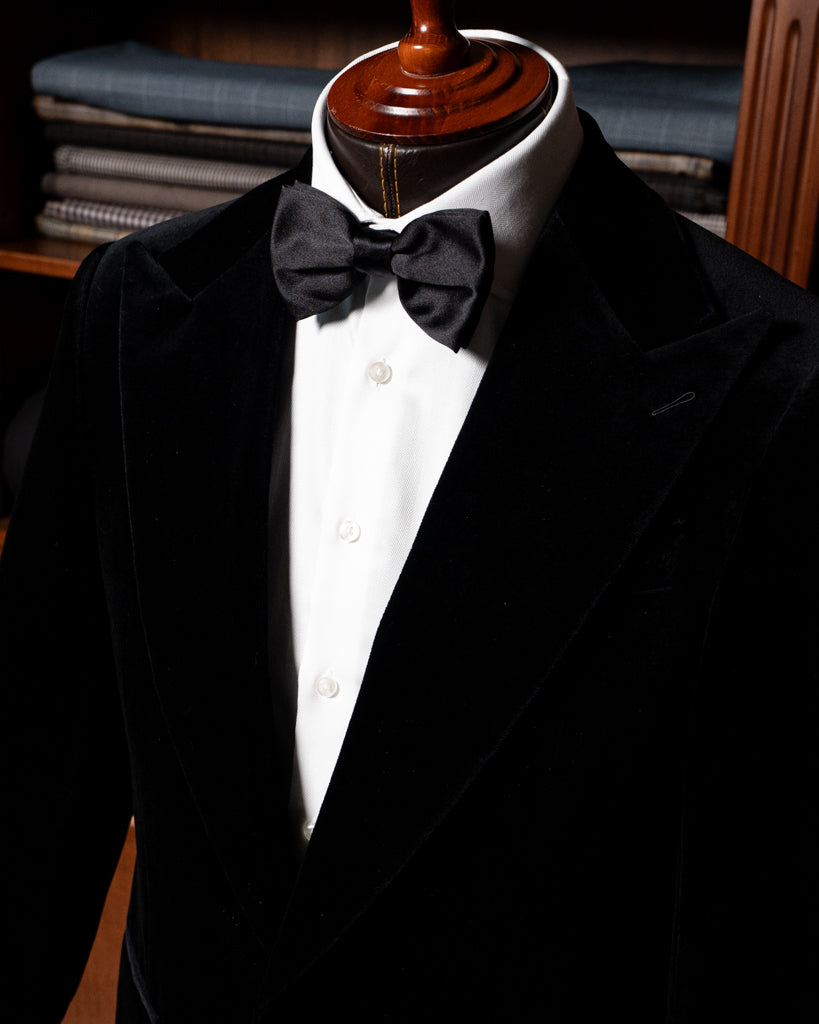
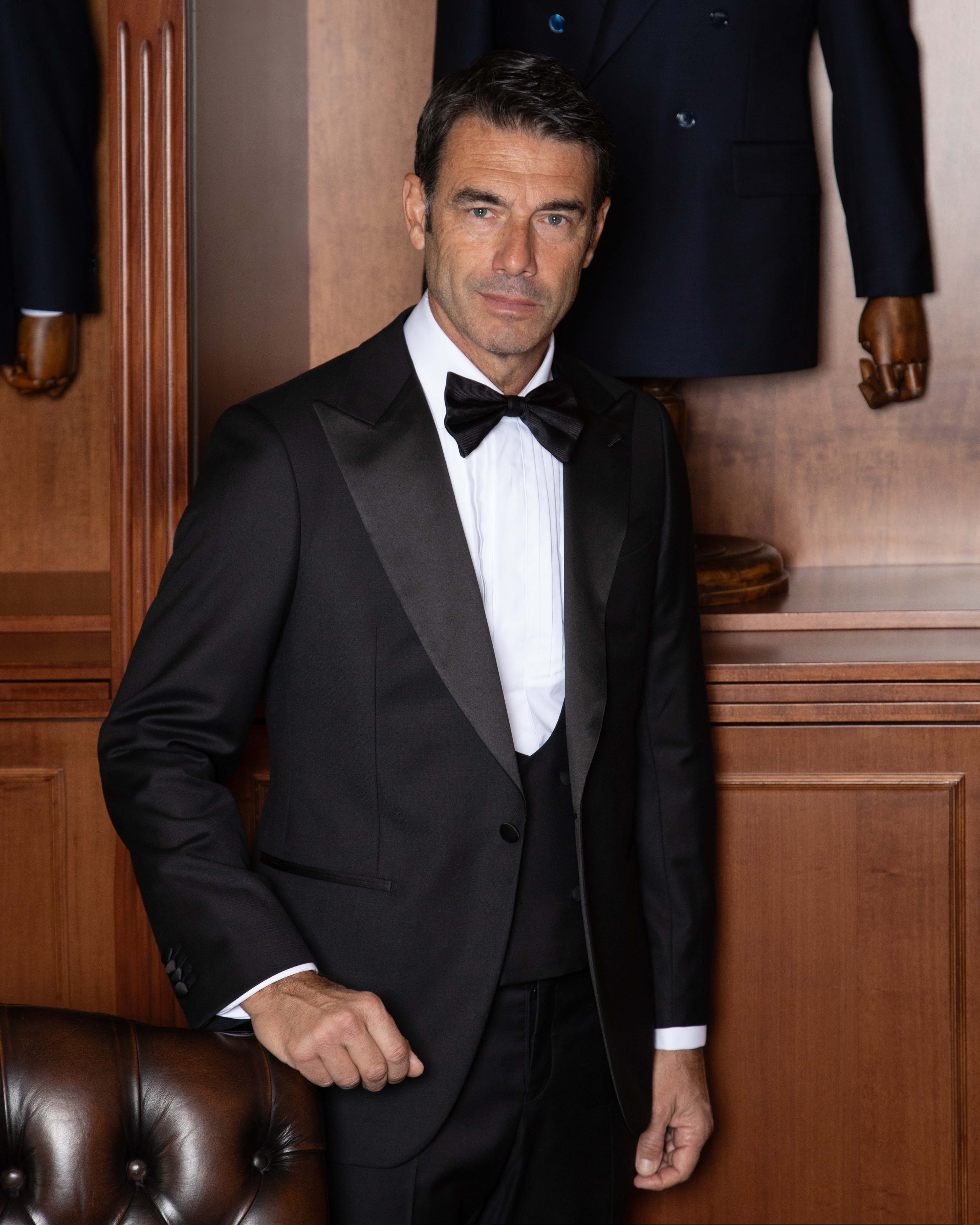
Business formal requires a dark full suit with a tie, business casual allows a jacket with non-matching pants and an optional tie, and black tie requires a tuxedo. Business formal is therefore the highest level for daytime work, while black tie is an evening-only dress code. Business casual is built on separates, with a jacket paired with pants in a different color or fabric. Black tie, by contrast, follows precise rules, described in our guide to the men's tuxedo. When in doubt, business formal is the safest choice for an important professional appointment.
| Dress code | Suit | Tie | When |
|---|---|---|---|
| Black tie | Tuxedo | Black bow tie | Galas and evening events |
| Business formal | Full navy or charcoal suit | Required, silk | Important meetings, institutional meetings |
| Business professional | Full suit, classic colors | Usually expected | Everyday office work |
| Business casual | Jacket and non-matching pants | Optional | Less formal offices, Fridays |
| Smart casual | Jacket or polished pieces, no suit | Usually none | Informal events, elegant leisure |
Why invest in a quality business formal suit?
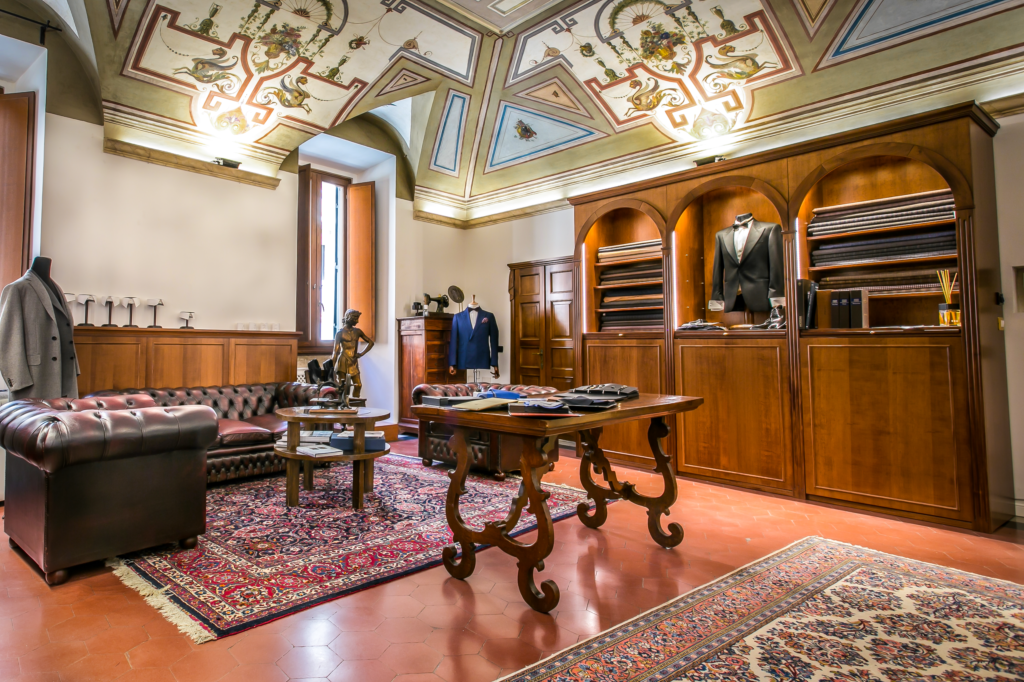
Because it is the suit for the most important professional moments, and at those moments fit, fabric and details convey reliability before a word is spoken. A well-constructed suit keeps its shape all day and for many seasons. A three-piece, such as the Modernico charcoal grey suit with waistcoat, adds another level of formality for the most solemn occasions. At Dalsarto, the business suit is available ready to wear and made to measure. The best choice depends on the time available and how the suit will be used. From the Dalsarto atelier in Rome, business formal becomes an everyday elegance.
Frequently asked questions
Are business formal and business professional the same thing? They are very similar and often used as synonyms; when they are distinguished, business formal is slightly stricter on colors and always requires a tie.
Can you wear a black suit for business formal? In the daytime it is best avoided: black belongs to the evening, while navy and charcoal grey are the correct colors, as explained in our grey suit guide.
Is a herringbone suit suitable for business formal? Yes, if the herringbone is fine and in navy or grey: from a distance it looks almost solid, as shown in the herringbone suit guide.
How do you pair shirt and tie for business formal? A white or light blue shirt with a silk tie darker than the shirt is the basic rule; all the details are in the guide on how to match a tie with a suit and shirt.
Which shirt colors are allowed? White and light blue are the most correct; other colors, such as pale pink, are better suited to business casual, as explained in the guide to shirt colors.
How does business formal change in winter? The dark suit and tie remain, with heavier fabrics and a long, dark overcoat; the seasonal rules are in the guide to the winter business dress code.
Is a separate navy jacket acceptable for business formal? No: a separate jacket belongs to business casual, while business formal requires a full suit; for separates, see the navy blazer guide.
Does business formal require a made-to-measure suit? No: a good-quality ready-to-wear suit, in the right size and with any needed adjustments, is fully suitable for business formal.