


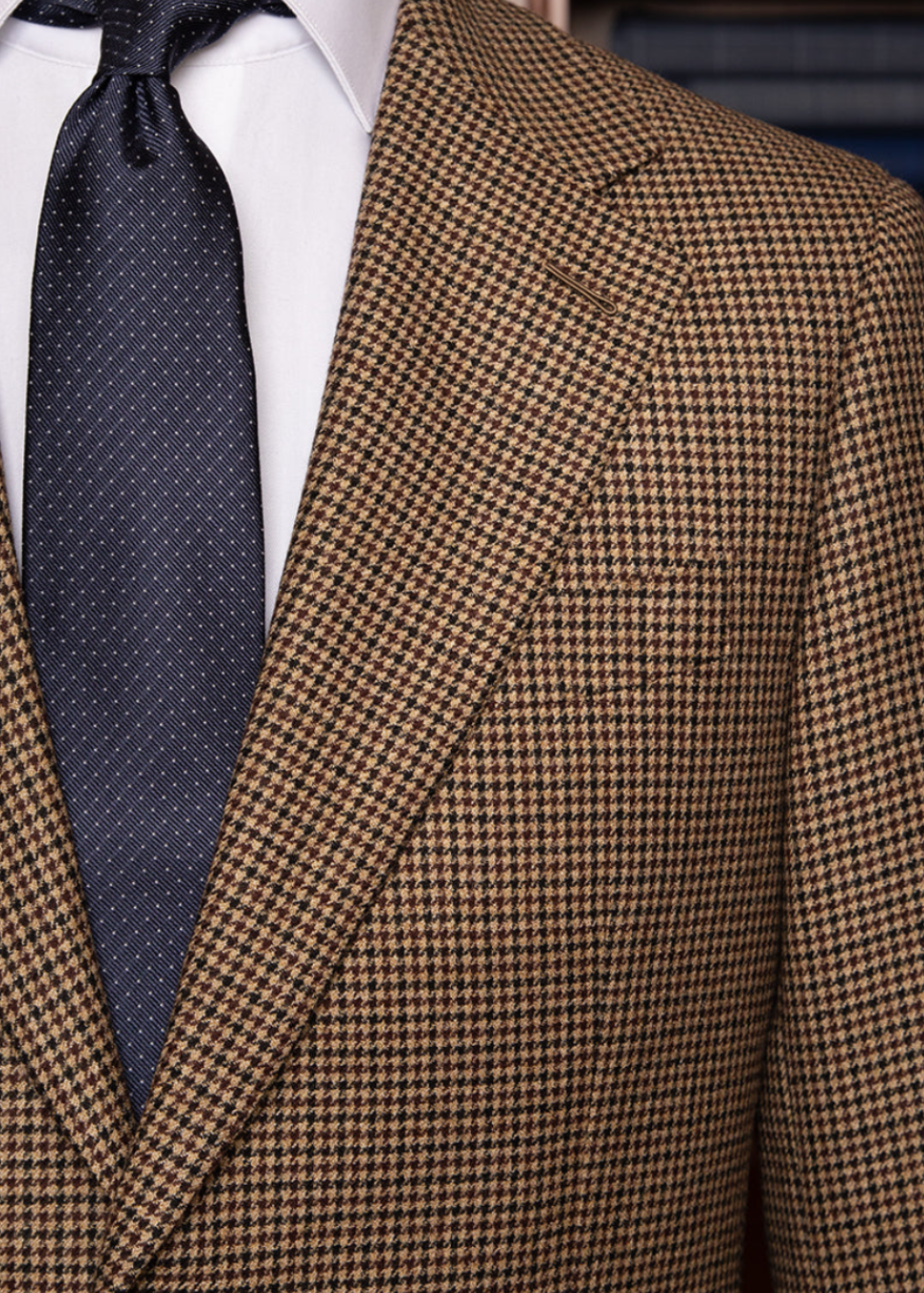
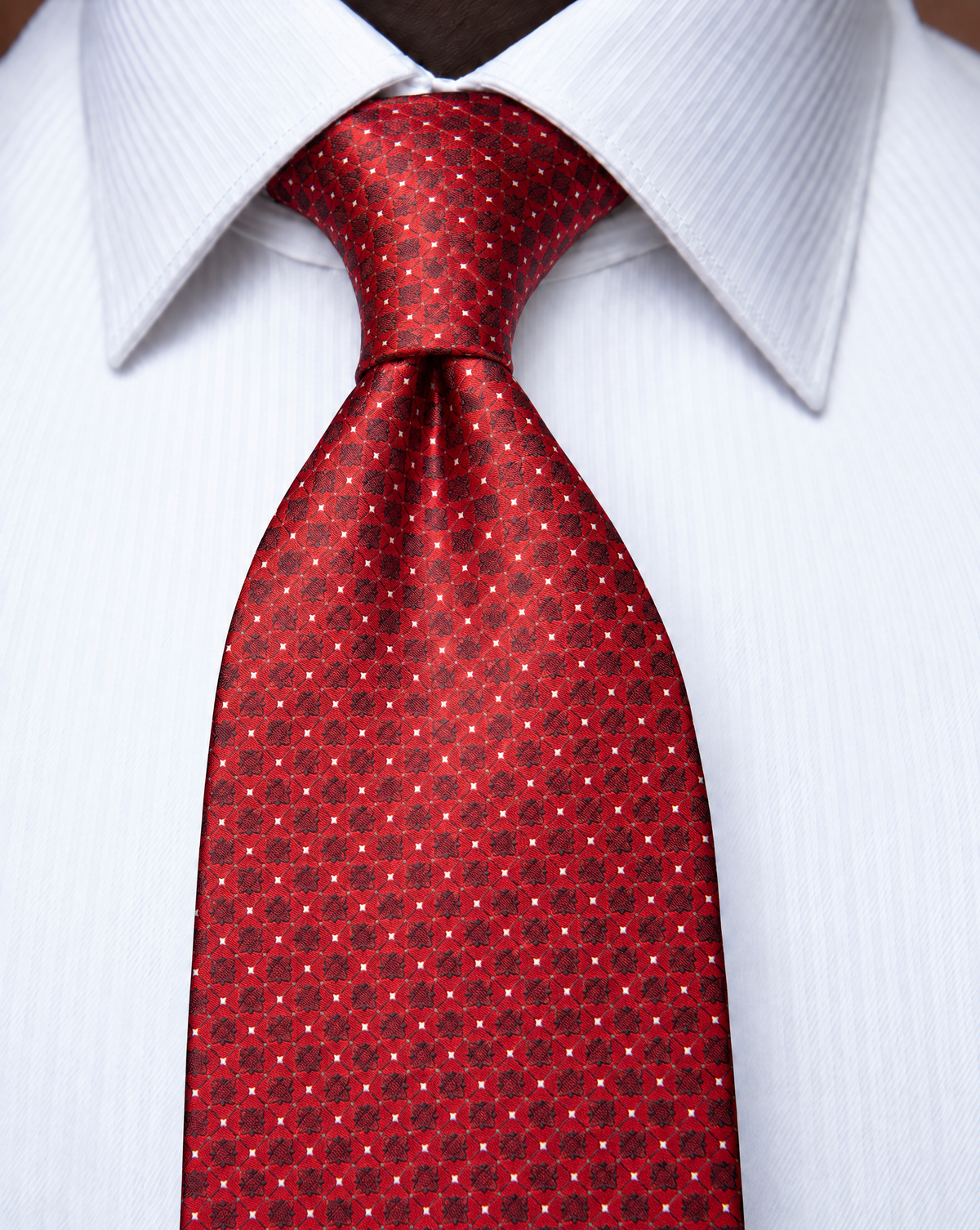
A tie says more about a man than almost any other detail of his outfit. Its color sets the mood, but its pattern sets the tone: serious or relaxed, classic or personal, for the office or for an evening out. Every pattern has its own history, its own level of formality and its own perfect moment. At Dalsarto, the collection of sartorial ties is almost entirely patterned, from small geometrics to rich paisley designs. This guide explains the main tie patterns, what they mean and when to wear each one.
Geometric ties: the most versatile pattern
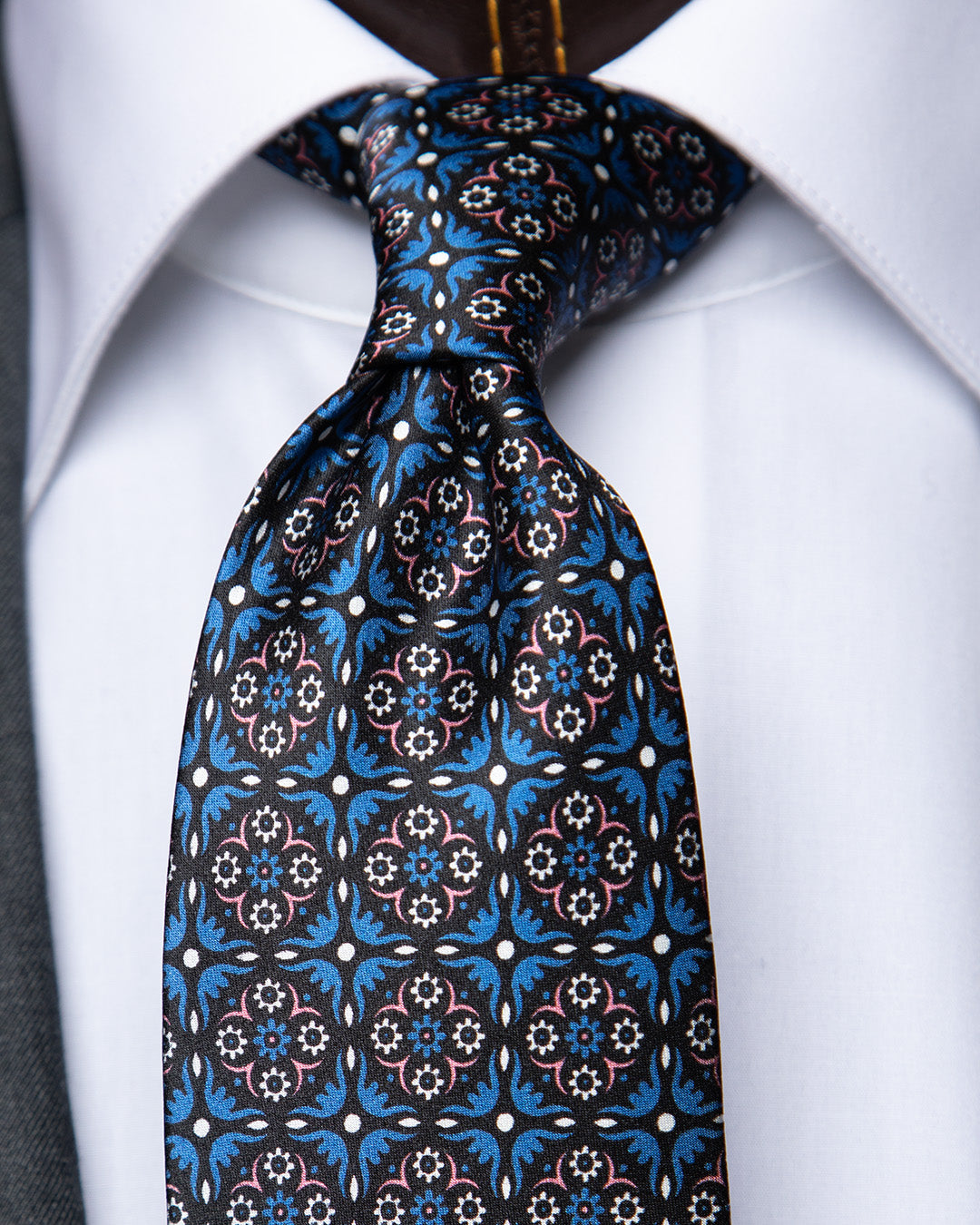
What is the most versatile tie pattern? The geometric tie is the most versatile, because its small, regular motifs look orderly and calm in any professional setting. Squares, diamonds, lattices, octagons and rings repeat evenly across the silk, so from a distance the tie reads almost as a solid color with texture. That is why geometric ties are the classic choice for the office, meetings and everyday business wear. The smaller the motif, the more formal the tie looks. The Dalsarto collection includes many of them, from ties with hexagonal rings and octagonal patterns to diamond motifs and geometric mosaics in navy, brown, ruby and ivory.
Paisley ties: the classic with a story
What is a paisley tie? A paisley tie carries a curved, teardrop-shaped motif that comes from ancient Persian design and takes its English name from the Scottish town of Paisley, where it was woven in the nineteenth century. In Italian it is called disegno cachemire, a reminder of the Kashmir shawls that brought it to Europe. Paisley is richer and more expressive than a geometric pattern, so it suits a man who wants personality without giving up elegance. The Dalsarto navy blue tie with light blue and gold paisley is woven in jacquard silk, so the pattern is part of the fabric rather than printed on it. Dalsarto suggests it with grey or blue suits and a white or light blue shirt.
Floral ties: a softer, more relaxed elegance
When should you wear a floral tie? A floral tie works best in business casual settings, with odd jackets rather than a strict dark suit. Flowers soften the look and bring color, which is why they are often chosen for daytime, spring and more personal occasions. Small, stylized flowers stay elegant, while large, realistic ones quickly look loud. The Dalsarto olive green tie with saffron and ruby flowers, for example, is suggested with textured jackets and chambray or denim shirts for a refined, slightly vintage business casual look. It shows how a floral tie can be relaxed and still sartorial.
Medallion ties: rounder motifs for a classic look
What is a medallion tie? A medallion tie has round, ornamental motifs spaced across the silk, a pattern with a traditional, almost heraldic character. Its round shapes make it a good partner for striped shirts and pinstripe suits, because curves never clash with straight lines. Medallions look best in deep colors with small touches of gold or blue. The Dalsarto cardinal red tie with gold and blue medallions is a good example: Dalsarto describes it as ideal with navy blue and charcoal grey suits. It is a confident tie for the office and for important days.
Micro-jacquard ties: the closest thing to a solid
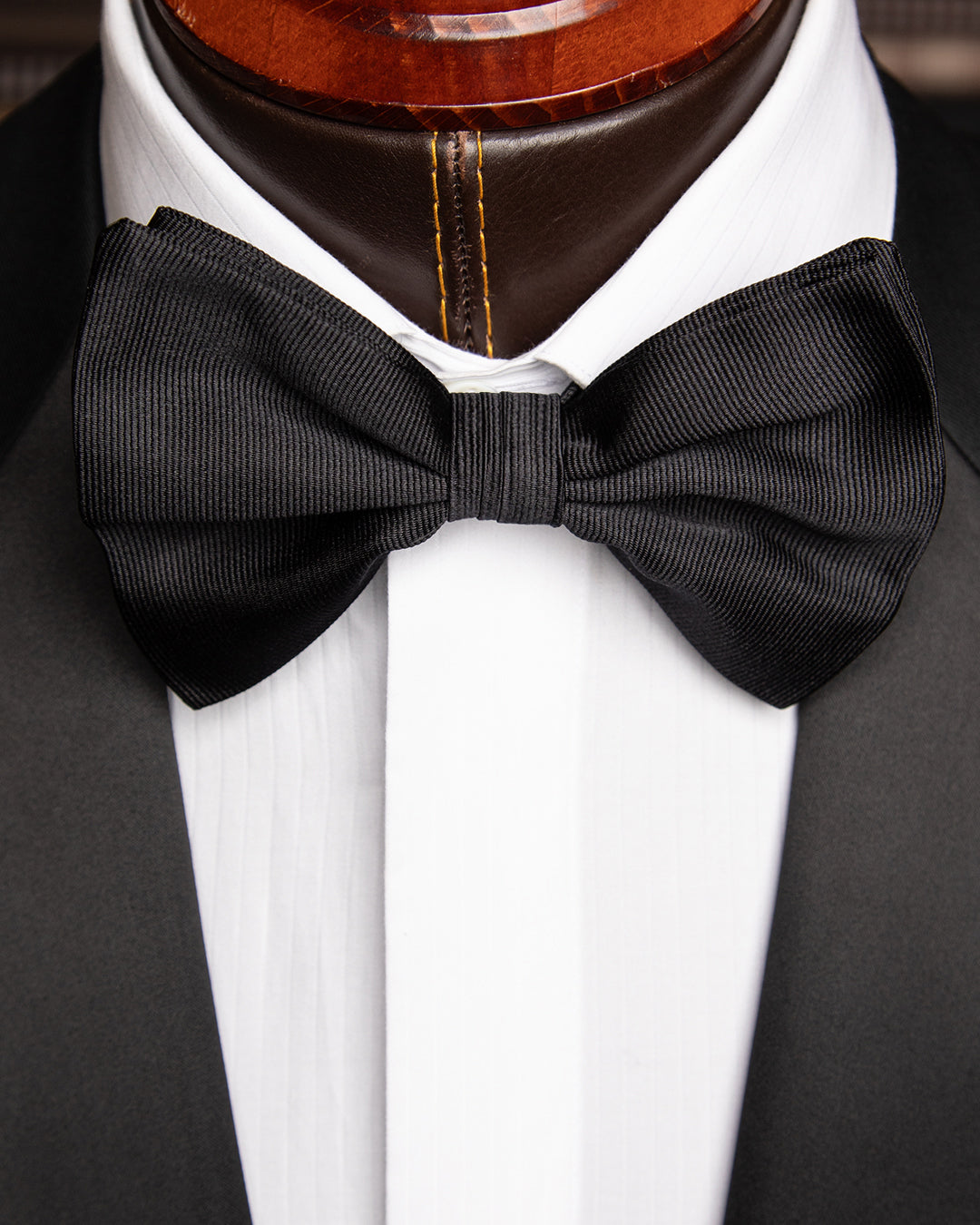
What is a micro-jacquard tie? A micro-jacquard tie has a tiny pattern woven into the silk, so small that from a distance it looks like a plain color with a fine, three-dimensional texture. It is the most formal and the easiest of all patterns, because it goes with any shirt and any suit. A black micro-jacquard tie suits the most formal moments and evening events, while colors such as dark purple, cyclamen, ochre and antique pink add color without adding noise. In the Dalsarto collection, these ties are the quiet base of a good wardrobe.
Striped ties: the regimental tradition
What do striped ties mean? Striped ties come from the British regimental tradition, in which the colors and direction of the stripes identified a regiment, a school or a club. Today they are a symbol of classic, slightly preppy elegance. Diagonal stripes look dynamic and youthful, especially in fresh colors. The Dalsarto white and green striped tie reinterprets the regimental motif in pure jacquard silk, with a diagonal stripe and a pearly white. Avoid wearing striped ties with a striped shirt or a pinstripe suit: lines on lines confuse the eye.
| Pattern | Character | Best For | Dalsarto Example |
|---|---|---|---|
| Micro-jacquard | Almost solid, very formal | Business, evening, formal events | Black micro-jacquard tie |
| Geometric | Orderly, calm, versatile | Office and everyday business | Ties with hexagonal rings, octagons or diamonds |
| Medallion | Traditional, confident | Business, important days | Cardinal red tie with gold and blue medallions |
| Stripes | Classic, regimental, dynamic | Business, daytime | White and green striped tie |
| Paisley | Rich, expressive | Business, with grey or blue suits | Navy tie with light blue and gold paisley |
| Floral | Soft, relaxed, personal | Business casual, daytime | Olive green tie with saffron and ruby flowers |
The value of choosing a Dalsarto tie
Why does the pattern of a tie matter? Because the pattern is what people notice after the color, and it decides whether a suit looks serious, relaxed or personal. Knowing the main patterns lets you choose the right tie for each occasion instead of wearing the same one every day. The Dalsarto collection of pure silk ties includes geometric, paisley, floral, medallion, micro-jacquard and striped designs, so every suit can find its partner. From the Dalsarto atelier in Rome, the right tie is the detail that makes a suit your own.