



The safari jacket (in Italian, sahariana) was born as a jacket for travel and exploration, with roomy pockets and a practical line. Today it has become one of the most elegant pieces in a man's casual wardrobe: the perfect alternative to the blazer for anyone who wants to look polished without wearing a tie. In this guide we explain how to recognise a tailored safari jacket, which fabric to choose for each season and how to wear it.
What is a safari jacket
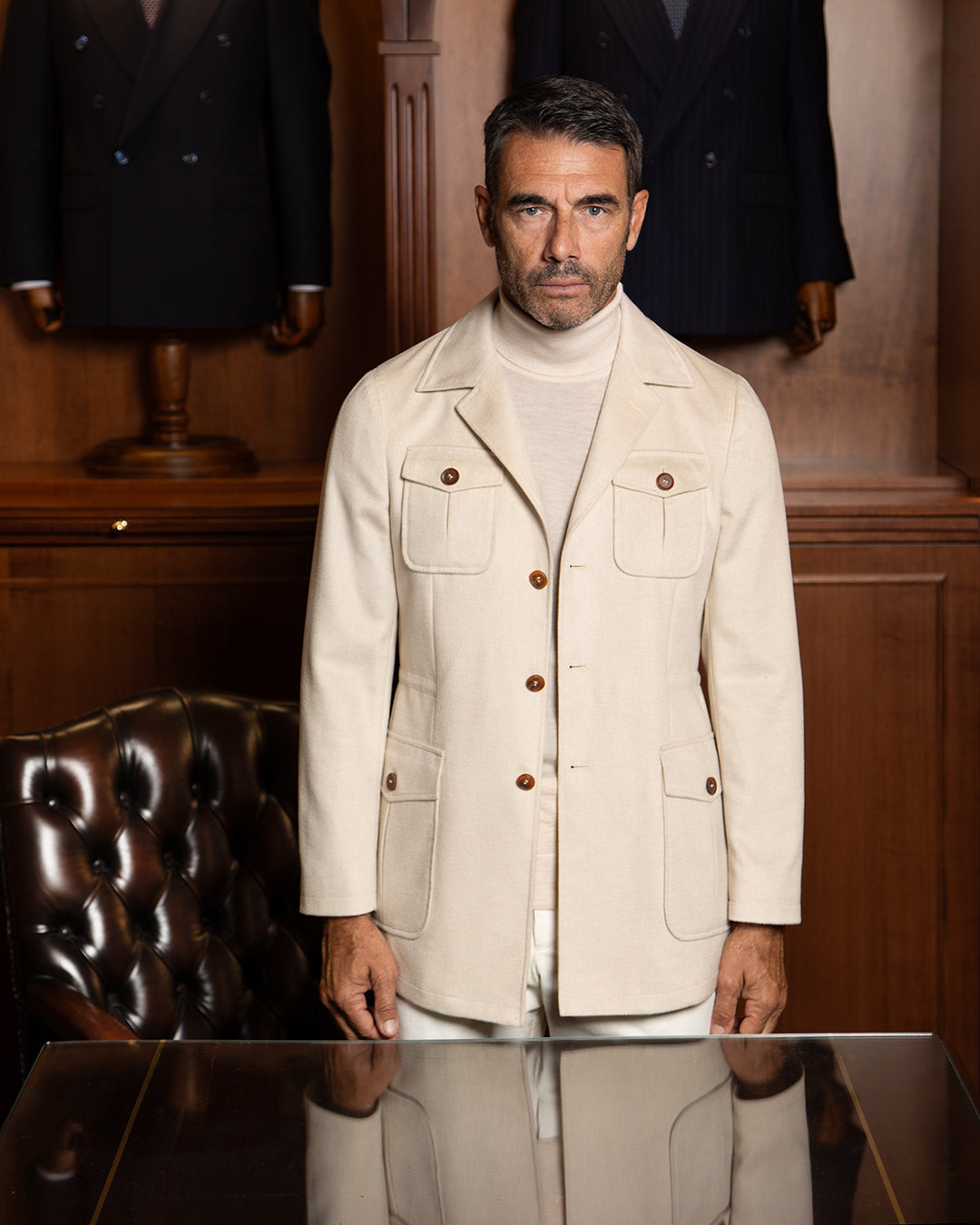
The safari jacket is inspired by military and travel wear, and is recognisable above all by its four patch pockets on the front: two on the chest and two on the hips. Dalsarto's tailored version keeps this functional character but with the construction of a jacket: single-breasted, classic lapels and a clean cut that makes it work in the city too.
Why choose it instead of a blazer
- It's elegant but relaxed: it works without a tie, with an open-collar shirt or a turtleneck.
- It's practical: the four pockets are handy when travelling and in everyday life.
- It has character: it's less common than a blazer and gets noticed, discreetly.
The right fabric for every season
Autumn and winter: herringbone wool
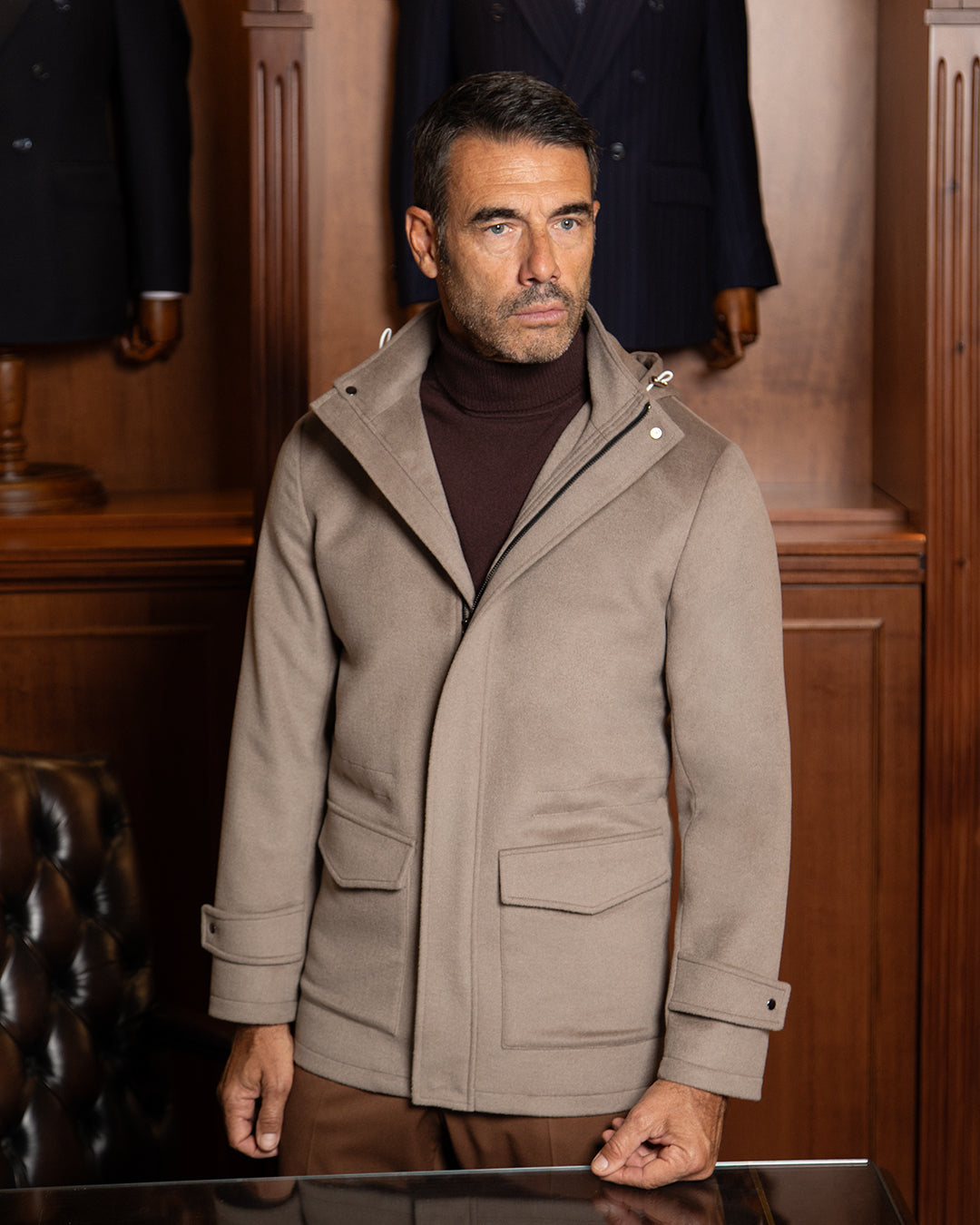
For the colder months, choose a lined wool safari jacket, ideally in herringbone, which gives the cloth depth and texture. Wear it over a sweater or a turtleneck like a proper winter jacket.
See: Green Herringbone Safari Jacket, Blue Herringbone Safari Jacket, Medium Blue Mélange Herringbone Safari Jacket, Taupe Tobacco Safari Jacket.
Spring and summer: linen and lighter cloths
In warm weather, a safari jacket in linen or a wool and linen blend is cool and breathable. The unlined versions are even lighter and softer.
See: Light Green Safari Jacket, Light Blue Mélange Safari Jacket, Khaki Safari Jacket, Olive Green Safari Jacket, Milk White Safari Jacket.
Safari jacket colours
- Sand, khaki and taupe: the classic safari colours, closest to its travel origins. See: Sand Safari Jacket, Taupe Safari Jacket.
- Green: from olive to forest green, the most natural, "country" colour.
- Blue and light blue: the most urban choice and the easiest to match.
- White and cream: perfect for summer and outdoor occasions. See: Cream Casual Safari Jacket.
How to wear a safari jacket
- In the city: with a light blue or white shirt, flannel or cotton trousers and loafers.
- In winter: over a turtleneck or a crew-neck knit, instead of a classic jacket.
- Travelling and at the weekend: with an open-collar shirt and chinos, for a comfortable but polished look.
- In summer: in light linen, with a lightweight shirt and white or beige trousers.
Made to order in our Rome showroom
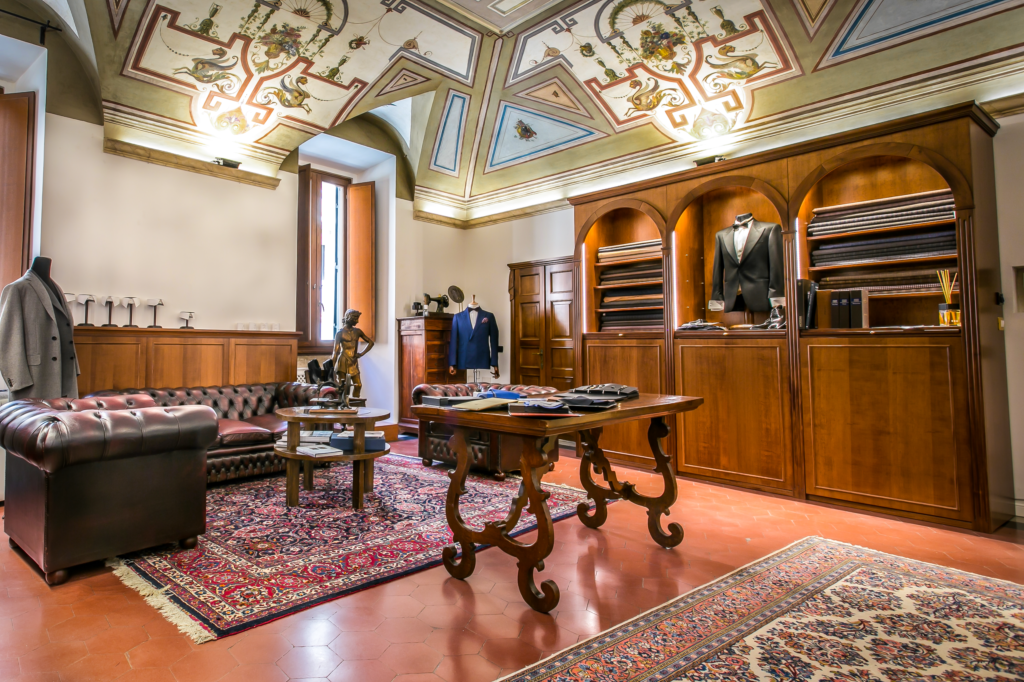
Dalsarto safari jackets are made to order: you choose the fabric and colour, and the jacket is made for you. To see the fabrics in person and try the models, visit our showroom in Rome.
Frequently asked questions
Can you wear a safari jacket in winter?
Yes. In lined herringbone wool it's a warm, structured jacket, perfect over a sweater or a turtleneck.
What do you wear with a safari jacket?
Plain shirts, knitwear, flannel trousers, chinos or cotton trousers, and shoes like loafers or lace-ups. For a relaxed look, avoid trousers in the same fabric.
Can you wear a safari jacket with a tie?
You can, but the safari jacket looks its best without a tie: it's designed as an elegant, informal alternative to the blazer.
What's the difference between a lined and an unlined safari jacket?
A lined one has more structure and is warmer; an unlined one is lighter and softer, ideal for spring and summer.