
Men’s Tuxedo: Rules, Use and Differences
The men’s tuxedo is a formal suit designed primarily for evening events. Originating as “black tie,” it is now associated with galas, receptions, and ceremonies that explicitly require this dress code. Some people confuse it with the morning coat, although the two garments serve very different purposes. This guide explains when to wear the tuxedo, its technical features, and how it should be distinguished from other formal suits.
When to wear the tuxedo
The tuxedo is appropriate for evening contexts and high-formality events, such as:
- Gala dinners and official receptions.
- Award ceremonies.
- Evening weddings (if specified on the invitation).
- Social events explicitly marked as “black tie.”
If no dress code is indicated, a classic suit remains the safer choice. The tuxedo is best reserved for occasions that specifically demand it.
Technical features of the tuxedo
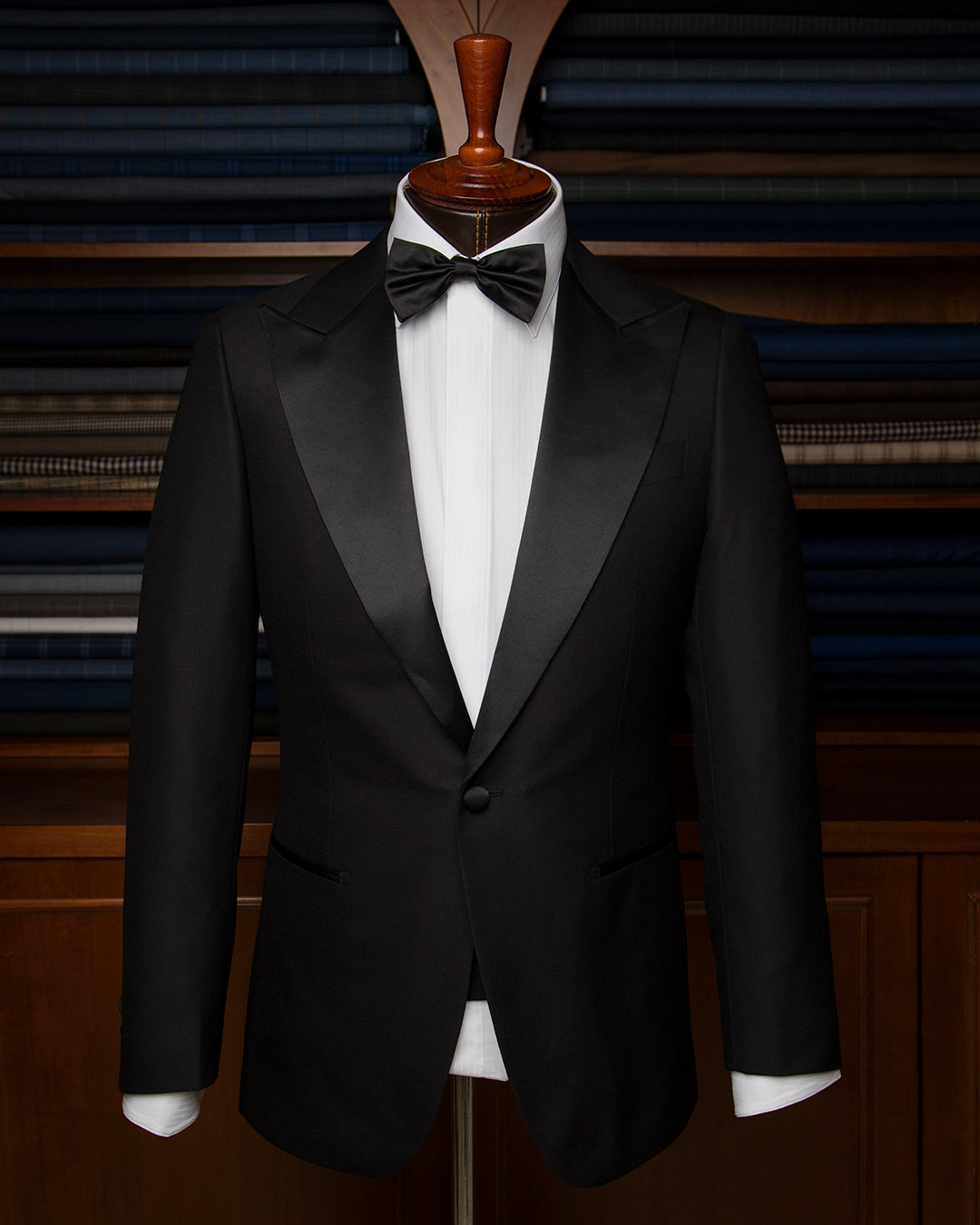
- Jacket: single-breasted, one button, with satin or silk lapels (shawl or peak).
- Trousers: same fabric as the jacket, with silk side braid.
- Shirt: white, with wingtip or classic collar, often with covered buttons.
- Bow tie: always black, silk, and self-tied.
- Accessories: cummerbund or waistcoat in black silk, patent leather shoes or polished Oxfords.
Tuxedo vs morning coat
The tuxedo is sometimes confused with the morning coat, as both belong to formal menswear. Their roles, however, are distinct:
| Feature | Tuxedo | Morning Coat |
|---|---|---|
| Time of day | Evening only | Daytime ceremonies |
| Jacket | Black or midnight blue, silk lapels | Tailcoat with long back, grey or black |
| Trousers | With silk braid | Grey striped |
| Accessories | Black bow tie | Tie |
Tuxedo variations
- Midnight blue: an elegant alternative to black, often chosen in modern contexts.
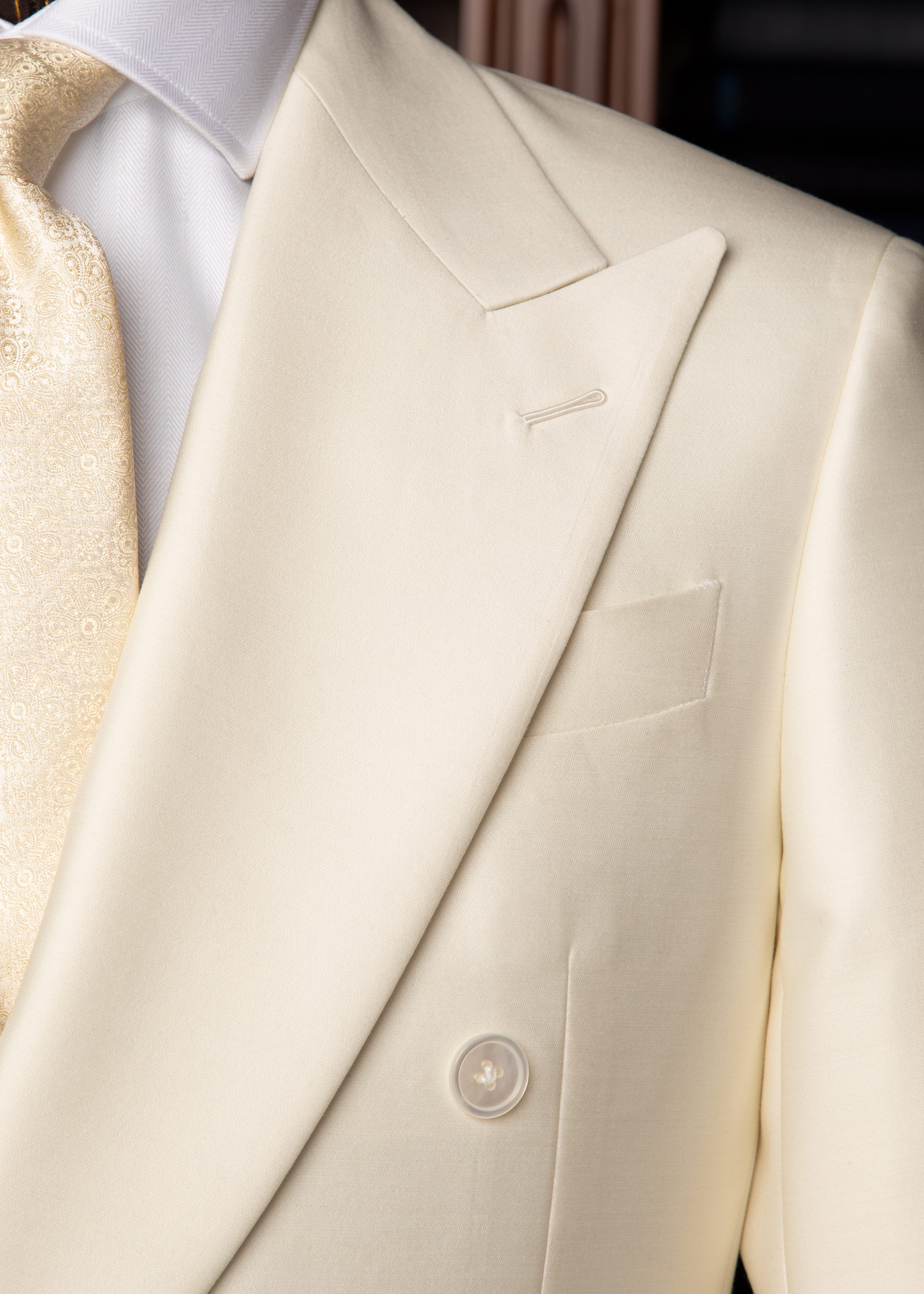
- Shawl lapel: softer, curved option compared to the peak lapel.
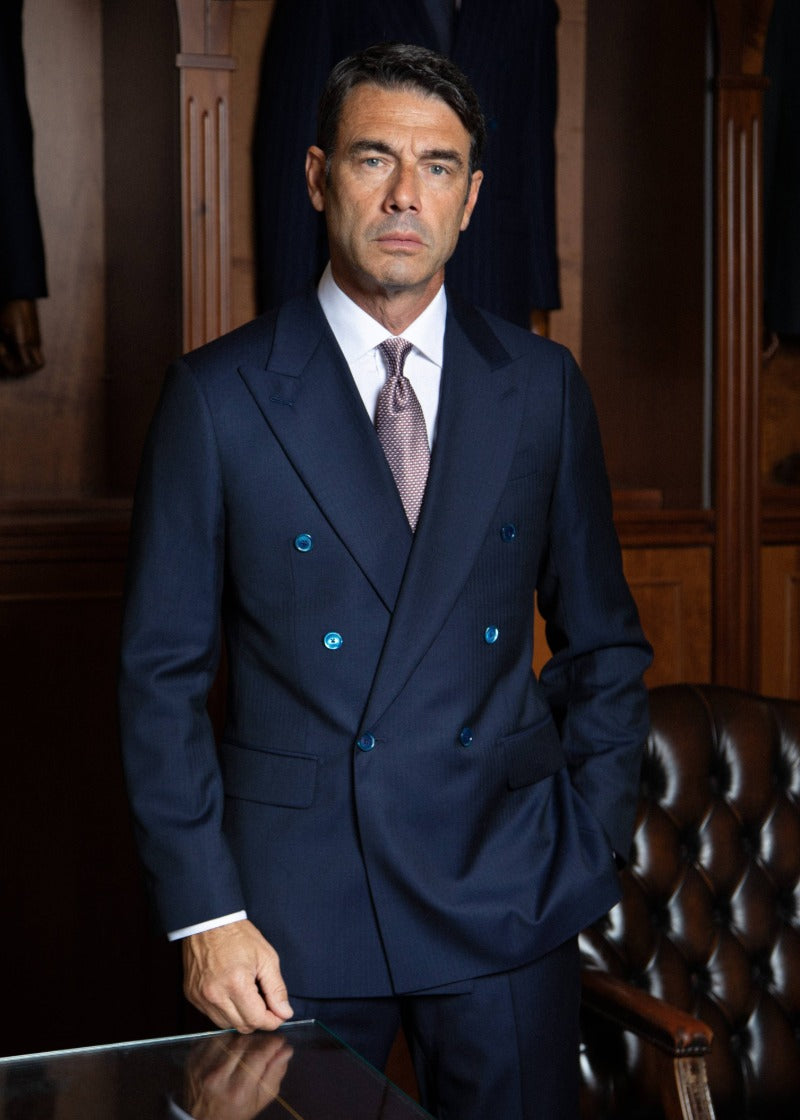
- Double-breasted tuxedo: less common, but appreciated in international settings.
Why choose Dalsarto
At Dalsarto in Rome, the tuxedo is crafted with strict respect for tradition while using premium fabrics and sartorial finishing. Whether made-to-measure or ready to wear, the quality remains consistent: refined and functional. The outcome is a tuxedo that meets the highest standards of elegance without excess.
Conclusion
The men’s tuxedo is a garment that requires precision in choice and context. Understanding its rules and distinctions from other formal suits avoids mistakes and ensures appropriateness. With Dalsarto in Rome, clients can count on tuxedos that embody both tradition and modern sartorial expertise.