



Every elegant wardrobe needs outerwear, but not every season calls for the same coat. The trench coat and the overcoat are the two pillars of men's outerwear: one born for changeable weather, the other for the cold. Choosing between them depends on the climate, the occasion and the style you want to express. In the Dalsarto collection, both have their place, from the Trench Beige for the in-between seasons to the wool-cashmere overcoats for winter. These are the golden rules for choosing the right one.
The trench coat: function first
What is a trench coat? The trench coat is a lighter coat with military origins, designed to protect from wind and changeable weather while keeping a sharp, tailored line. Its signature details are functional: a storm flap at the front, adjustable cuff straps and a belt that defines the waist. The Dalsarto Trench Beige follows this tradition with a double-breasted front, embossed metal buttons, a structured undercollar and a coordinated belt with buckle. It is a Four Seasons piece, made in a blend of wool, polyester and silk, ideal when a heavy coat would be too much.
The overcoat: warmth and structure
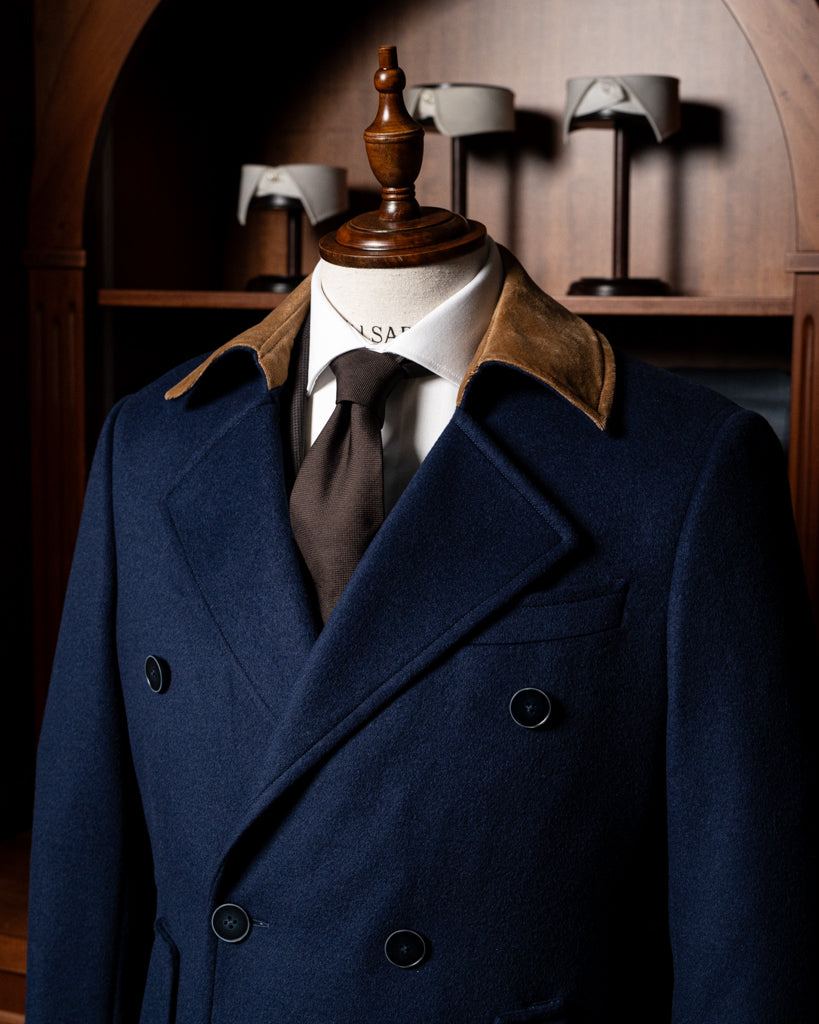
What is an overcoat? The overcoat is the classic winter coat: heavier, warmer and cut to be worn over a suit jacket. It is usually made in wool or wool-cashmere, fully lined and long enough to cover the jacket completely. In the Dalsarto collection, overcoats such as the Mantegna and Ghiberti models belong to the Autumn-Winter season, with knee-length cuts designed for cold days. It is the coat that defines a winter wardrobe, from the office to the evening.
The weather rule: when to wear each one
Should you wear a trench coat or an overcoat in cold weather? The simplest rule is temperature. When it is truly cold, the overcoat is the right choice: its dense fabric and lining keep you warm over a suit. In spring, autumn and mild winters, the trench coat is lighter and more comfortable, protecting from wind without overheating. In cities with mild winters, like Rome, the trench is ideal in early autumn and spring, while the overcoat becomes essential in the coldest months.
The occasion rule: business, evening and weekend
Is a trench coat or an overcoat more formal? The overcoat is the more formal of the two, especially in dark colors such as navy, charcoal or black, and it is the natural choice for evening events and important meetings. The trench coat is elegant but more relaxed, perfect for the office in mild weather, city travel and the weekend. Over a suit, both work well, as long as the coat fully covers the jacket. For black tie and formal evenings, the overcoat remains the correct choice.
Style: how to wear them
How should a trench coat and an overcoat be worn? A trench coat can be worn buttoned, or open with the belt tied loosely at the back for a more relaxed look. It pairs naturally with suits, sports jackets and knitwear in neutral tones. An overcoat is worn buttoned in the cold, or open over a suit for a more nonchalant elegance. In both cases, the fit is what makes the difference: the coat must sit cleanly over the jacket, without pulling at the shoulders.
| Trench Coat | Overcoat | |
|---|---|---|
| Season | Spring, autumn, mild winters | Autumn and winter |
| Weight | Lighter | Heavier and warmer |
| Signature details | Storm flap, cuff straps, belt | Clean lines, lining, structured fabric |
| Formality | Elegant but relaxed | More formal, ideal for evening |
| Over a suit | Yes, in mild weather | Yes, in cold weather |
| Dalsarto example | Trench Beige (Four Seasons) | Mantegna, Ghiberti (Autumn-Winter) |
The value of choosing both with Dalsarto
Do you need a trench coat and an overcoat? For a complete wardrobe, yes: together they cover the whole year, from the first cool days of autumn to the coldest winter evenings. A trench coat for the in-between seasons and an overcoat for winter give every outfit the right outerwear in every weather. In the Dalsarto collection, both are designed with the same attention to cut and detail. From the Dalsarto atelier in Rome, they are two coats that complete each other, season after season.